

About Utilizer
At Utilizer, their mission is to deliver durable, high-quality electric fencing solutions that stand the test of time. They build for innovation, reliability, and excellence — products that utilize and empower farms, ranches, and properties for generations to come.
That means steel where other brands use plastic, hardware that installs once instead of every spring, and gear designed around how cattle actually behave. The Electric Fence Extension Stand-Off Kit is built on that standard.
If Cattle Can Touch Your Fence, They Will Destroy It
Not maybe. Will.
Cows lean. They rub. They push through for the greener grass on the other side. Every time they do it, your posts loosen, your wire stretches, and your voltage drops. Then you spend a Saturday you did not have fixing a fence you already paid for.
An electric fence offset fixes the root problem instead of the symptom. Here is how it works and why the distance matters more than most guys think.
The Real Problem Is Contact, Not Fence Quality
Most fence failure is not bad wire. It is cattle pressure in the same three places:
- Corners, where cattle turn and lean into the brace
- Gates and water gaps, where the traffic never stops
- Any stretch with better grass on the far side
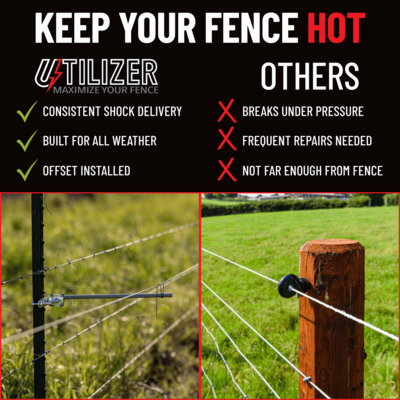
Add a hot wire flat against your barbed or woven wire and you create a second problem: grounding. Steel touching steel bleeds voltage straight into the earth. Your charger reads fine at the box and your fence is dead at the far corner.
What an Electric Fence Offset Actually Does
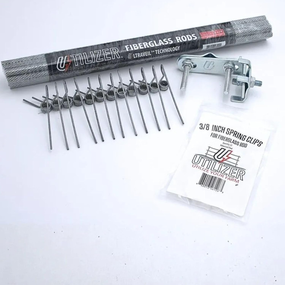
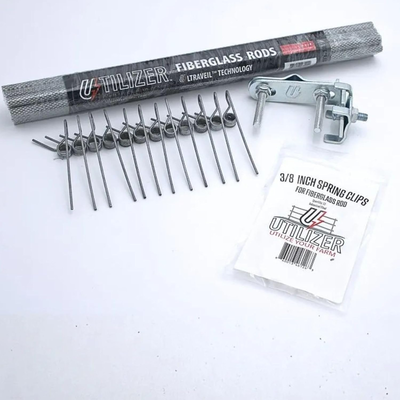
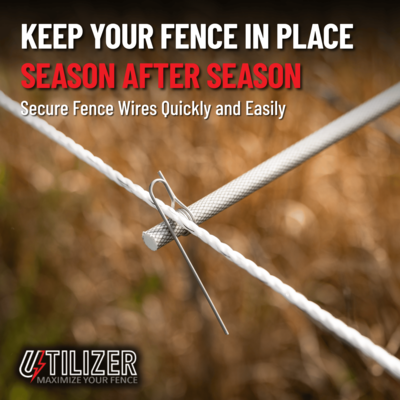
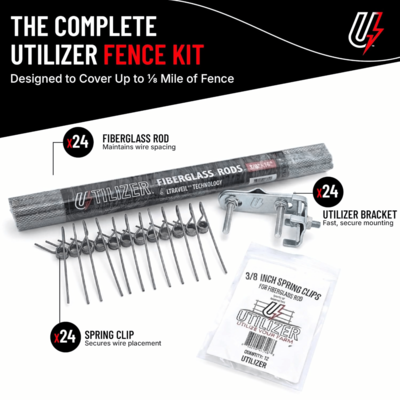
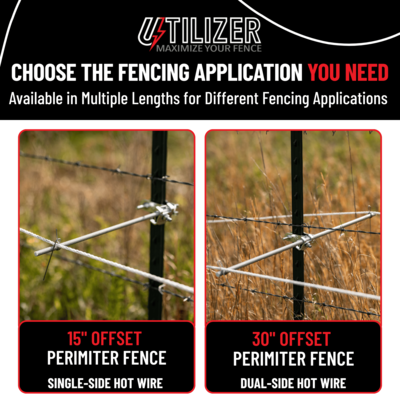
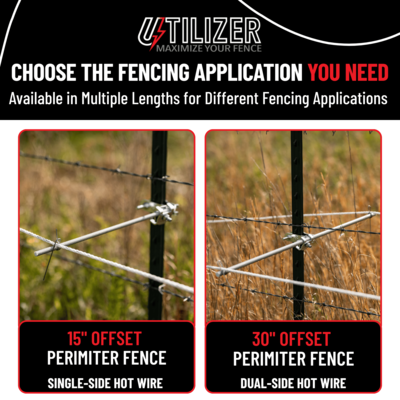
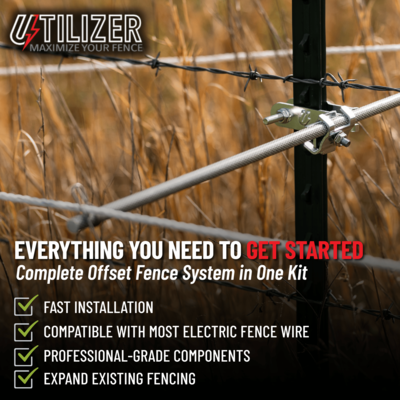
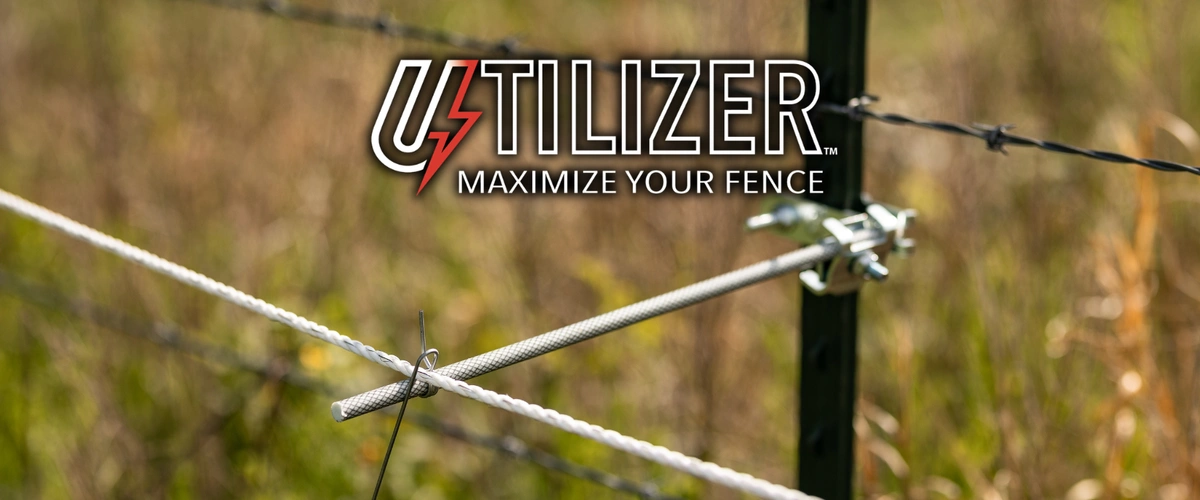
A cattle electric fence offset moves the hot wire off the fence and out into the pasture. The Utilizer Electric Fence Extension Stand-Off Kit holds it 15 inches out on a 3/8" fiberglass rod. That does three jobs at once:
- Cattle get shocked before they ever reach the fence. No contact, no leaning, no rubbing, no damage.
- The hot wire never touches barbed or woven wire, so there is no short and no voltage loss down the line.
- A hotter, more consistent charge trains cattle faster — usually in days, not weeks.
That last point is the one people miss. Cattle respect a fence that bites every single time. A weak, inconsistent fence teaches them the opposite: that pushing works.
Why 15 Inches Is the Number
Offset distance is a trade-off. Too short and a cow with her head down can still reach the fence past the wire. Too long and the rod takes abuse from equipment and gets in the way of mowing.
Fifteen inches puts the hot wire ahead of a cow's shoulder and nose while she is still standing off the fence — far enough to stop pressure before it starts, tight enough to stay out of the way of a bush hog.
Spacing: Every 28 to 32 Feet
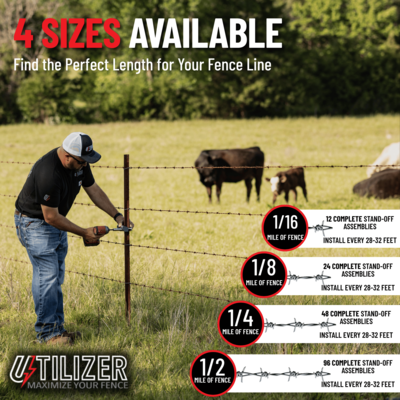
Install one assembly every 28–32 feet. That is roughly every second T-post on standard spacing. Closer than that is wasted money. Farther apart and the wire sags between stand-offs, which brings it back toward the fence and back toward a short.
In high-pressure spots — corners, gate approaches, along a hay lot — tighten spacing up. That is where the damage bill comes from.
Steel, Not Plastic
Plastic clips and insulators are cheap for a reason. Two winters of UV and one 1,400-pound cow leaning into a corner and they crack, drop the wire, and short the whole line.
The Utilizer kit is built from heavy-duty galvanized steel with galvanized steel clips:
- Corrosion-resistant for wet, humid, and salted conditions
- Holds up to real cattle pressure instead of snapping at the mount
- Permanent hardware, not a seasonal patch you re-buy every spring
Installs With One Socket
No drilling. No tearing down fence. No specialty tools. All you need is a 1/2" socket.
- Pick your first post — start at a corner or gate, where pressure is highest.
- Mount the bracket to a standard T-post and snug it down with the 1/2" socket.
- Slide the 3/8" fiberglass rod into the bracket, pointed out into the pasture.
- Clip in your hot wire and run the line, adding an assembly every 28–32 feet.
- Energize and test voltage at the far end of the run, not at the charger.
One person can do a long stretch in an afternoon.
Works With the Wire You Already Have
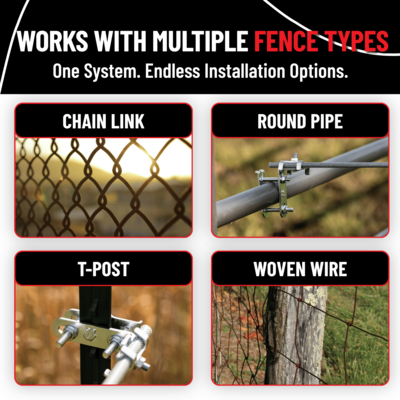
You do not need to rebuild anything. The stand-off kit is compatible with:
- High tensile wire
- Polywire and polyrope
- Polybraid and polytape
Barbed, woven, or high tensile fence — the offset bolts onto the T-posts you already have in the ground.
Specifications
|
Specification |
Detail |
|
Stand-off distance |
15-inch electric fence offset |
|
Rod diameter |
3/8" fiberglass rod |
|
Bracket material |
Heavy-duty galvanized steel |
|
Clip material |
Galvanized steel (corrosion-resistant) |
|
Mount type |
Standard T-post mount |
|
Compatibility |
High tensile wire, polywire, polyrope, polybraid, polytape |
|
Installation tool |
1/2" socket required |
|
Recommended spacing |
28–32 ft between assemblies |
The Math on Repairs
One rebuilt corner brace costs you posts, wire, a day of labor, and the fuel to haul it all out there. Cattle out on the road costs a whole lot more than that.
A stand-off line is a one-time install that stops the pressure causing those bills. Install it once, train your cattle fast, and quit patching the same stretch every year.
Frequently Asked Questions
Will an electric fence offset work on barbed wire fence?
Yes. That is the main use case. The 15-inch stand-off holds the hot wire clear of the barbed wire so there is no metal-to-metal contact and no grounding.
Which side of the fence does the offset go on?
The side the cattle are on. If you graze both sides, run stand-offs on both sides.
How high should I mount the stand-off?
For cattle, roughly nose-to-shoulder height on your smallest animals in the group — high enough that they meet the wire before the fence, low enough that they cannot duck under it.
Do I need a bigger charger?
Usually the opposite. Removing shorts and contact points recovers voltage you were already losing, so your existing charger typically reads stronger after install.
How many assemblies do I need?
Divide your fence footage by 30. A 1,000-foot run needs about 33 assemblies.
Stop Fixing the Same Fence
The Utilizer Electric Fence Extension Stand-Off Kit — The Build It Better Bundle is built to solve cattle pressure permanently: 15-inch steel offset, T-post mount, one socket, done.
Shop the Utilizer Electric Fence Extension Stand-Off Kit at Agzaga.