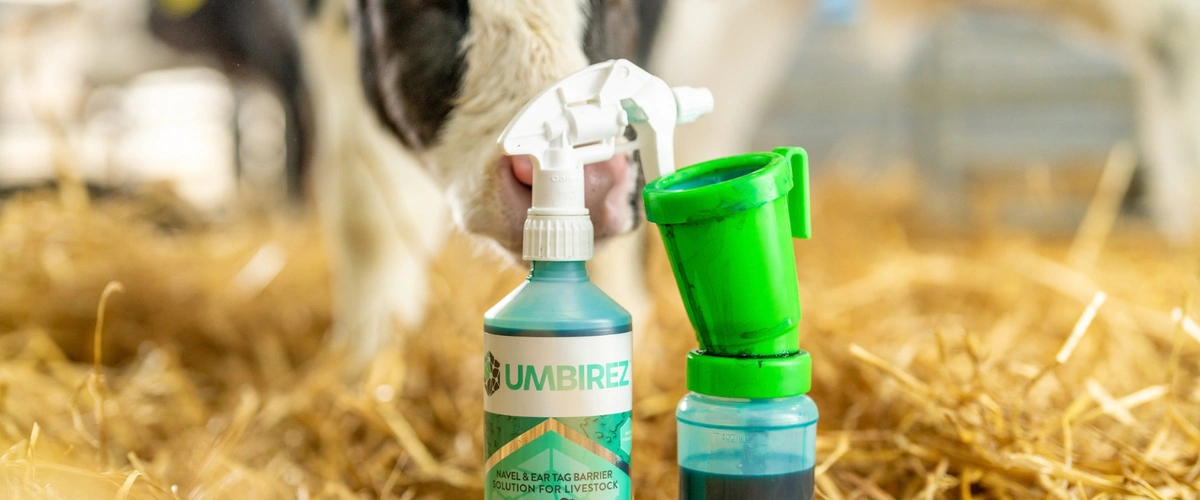


Navel ill, or umbilical infection, remains a significant cause of poor calf health, reduced growth, and increased mortality on cattle farms. But with proactive management and the right products, it’s a preventable problem.
At birth, the calf’s umbilical cord becomes a vulnerable entry point for bacteria. Until the navel dries and seals, it acts as an “open tube” into the calf’s body.
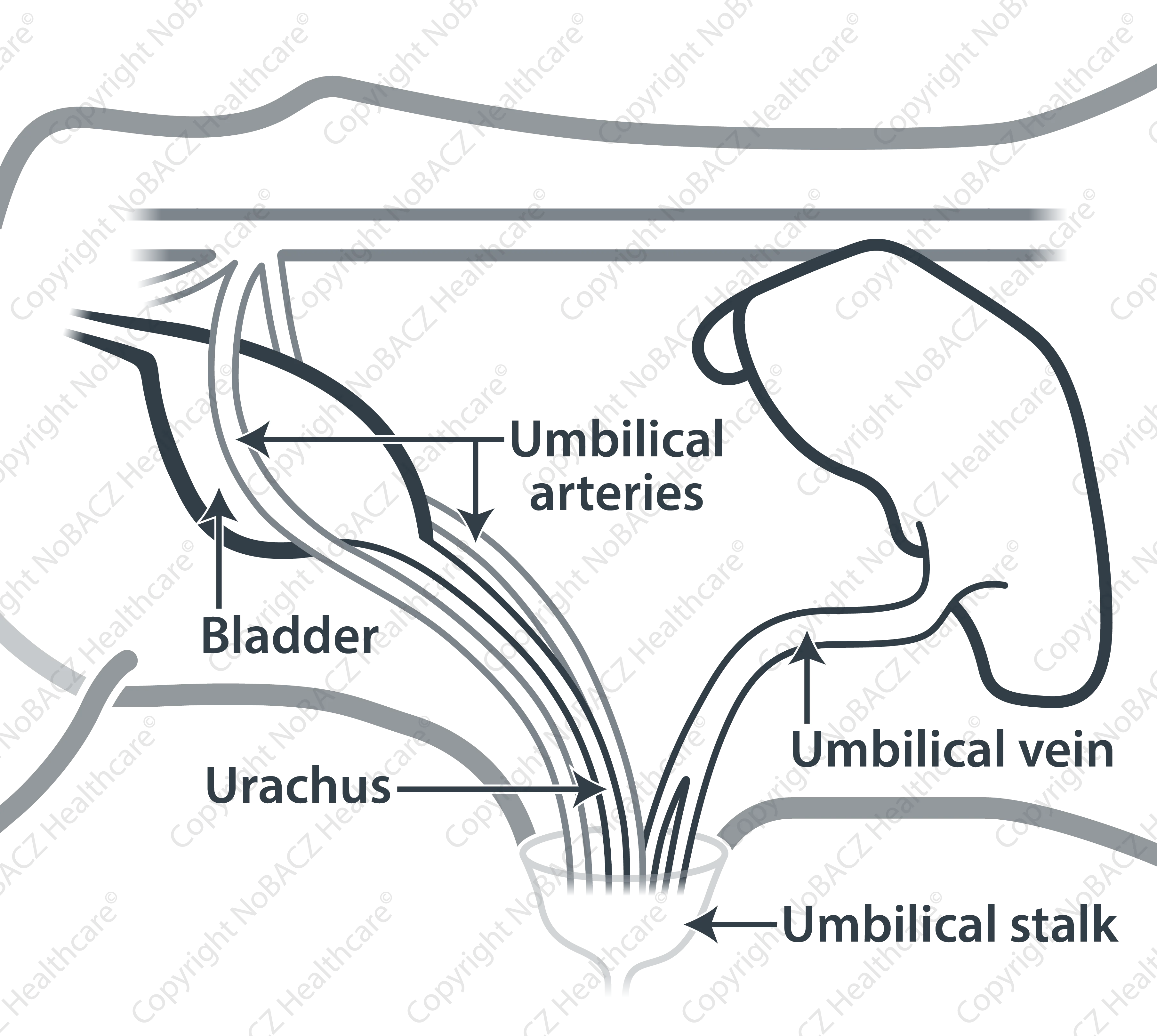
(Figure 1).
Navel infections—also known as omphalitis—can begin with a swollen, hot, and painful umbilical stump. In more severe cases, infection can spread internally, leading to peritonitis, joint ill, meningitis, or even death within days¹.
1-in-3 calves suffer from navel infections, regardless of breed or production system². Many cases go undiagnosed, contributing to unexplained illness or death and lowering
average daily liveweight gains by 3.5 oz per day. Affected calves are more than twice as likely to die than healthy calves³.
Key Risk Factors for Navel Infection:
Environmental bacteria are the primary cause of infection, with risk factors including:
- Wet or unhygienic calving environments
- Difficult births (dystocia)
- Birthweight over 50 kg
- Short umbilical cords (< 3 cm)⁴
- Lack of immediate navel disinfection
- Calves which do not have their navels disinfected after birth are over 2.3x more likely to suffer navel infection. (Fig 2)
How can we reduce the risk of bacterial entry through the navel entry?
At birth the navel presents a hollow tube between the bacteria in the environment and the calf, allowing bacteria to: localize at the navel; enter the bloodstream; track up to the liver; or settle in the joints (Figure 1).
Therefore, closing that opening as quickly as possible is essential. Cleansing the navel as soon as possible after birth and choosing a product that protects and dries the navel as quickly as possible reduce the risk of bacterial infection.
Other steps producers can take to reduce navel infections include reducing environmental contamination by optimizing calving pen hygiene and developing strong early immunity.
Keep bedding dry, disinfect pens, dip the navel immediately after birth, and ensure rapid colostrum intake to boost resistance. Routine monitoring helps catch swelling or discharge early for fast treatment.
Producers often ask if they should dip or spray the navel. Recent work published in the United Kingdom has demonstrated that dipping navels is superior to spraying for survival. Animals that had their navels sprayed were more than twice as likely to die than those that had navels dipped5.
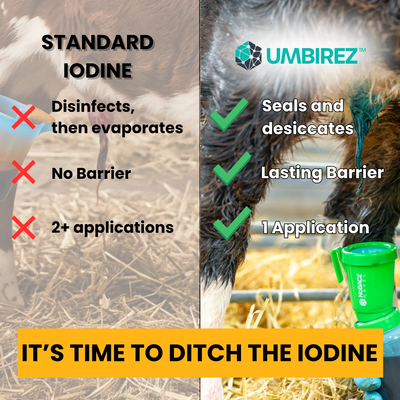
Iodine has been the go-to for navel dipping for decades, but research and real-world results are showing it may not be enough:
A New Approach to Navel Hygiene: UMBIREZ™
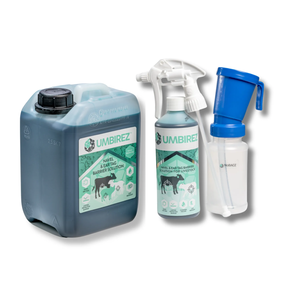
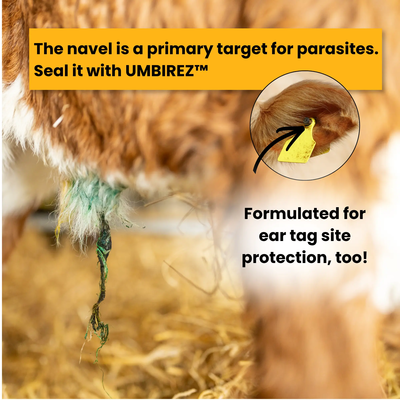
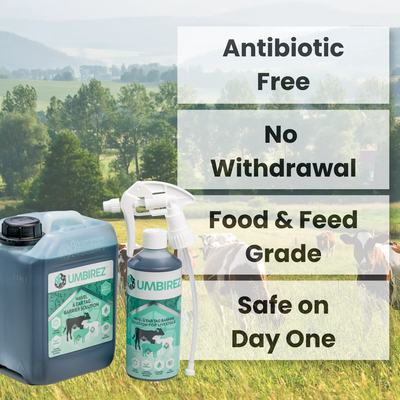
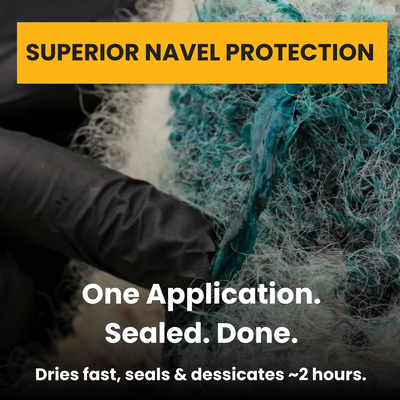
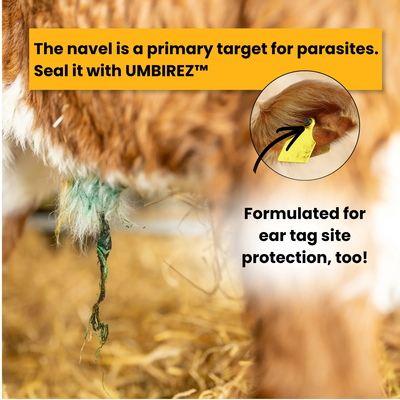
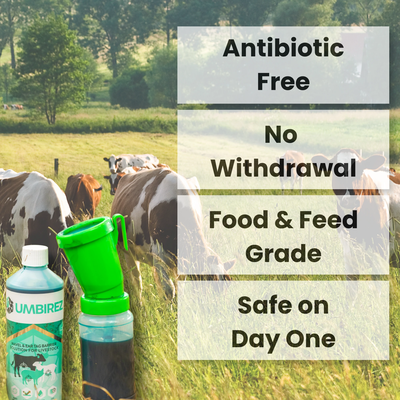
UMBIREZ is an antibiotic-free, purpose-built solution designed to tackle this challenge head-on. It’s the first navel product to combine cleansing, rapid drying, and a waterproof physical barrier in one application.
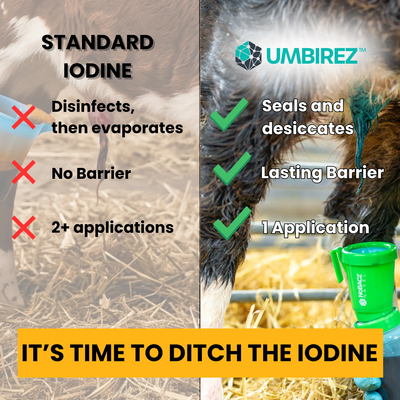
Unlike iodine, which offers no lasting protection and can be easily washed away, UMBIREZ contains a patented blend of natural polymers and metal ions to offer a waterproof, long-lasting barrier that stands up to the farm environment.
Real-World Results
Data presented at the American Association of Bovine Practitioners 2026 conference follows a commercial beef suckler herd that switched from double-dipping navels with iodine to using UMBIREZ during the 2025 calving season. No other management changes were made.
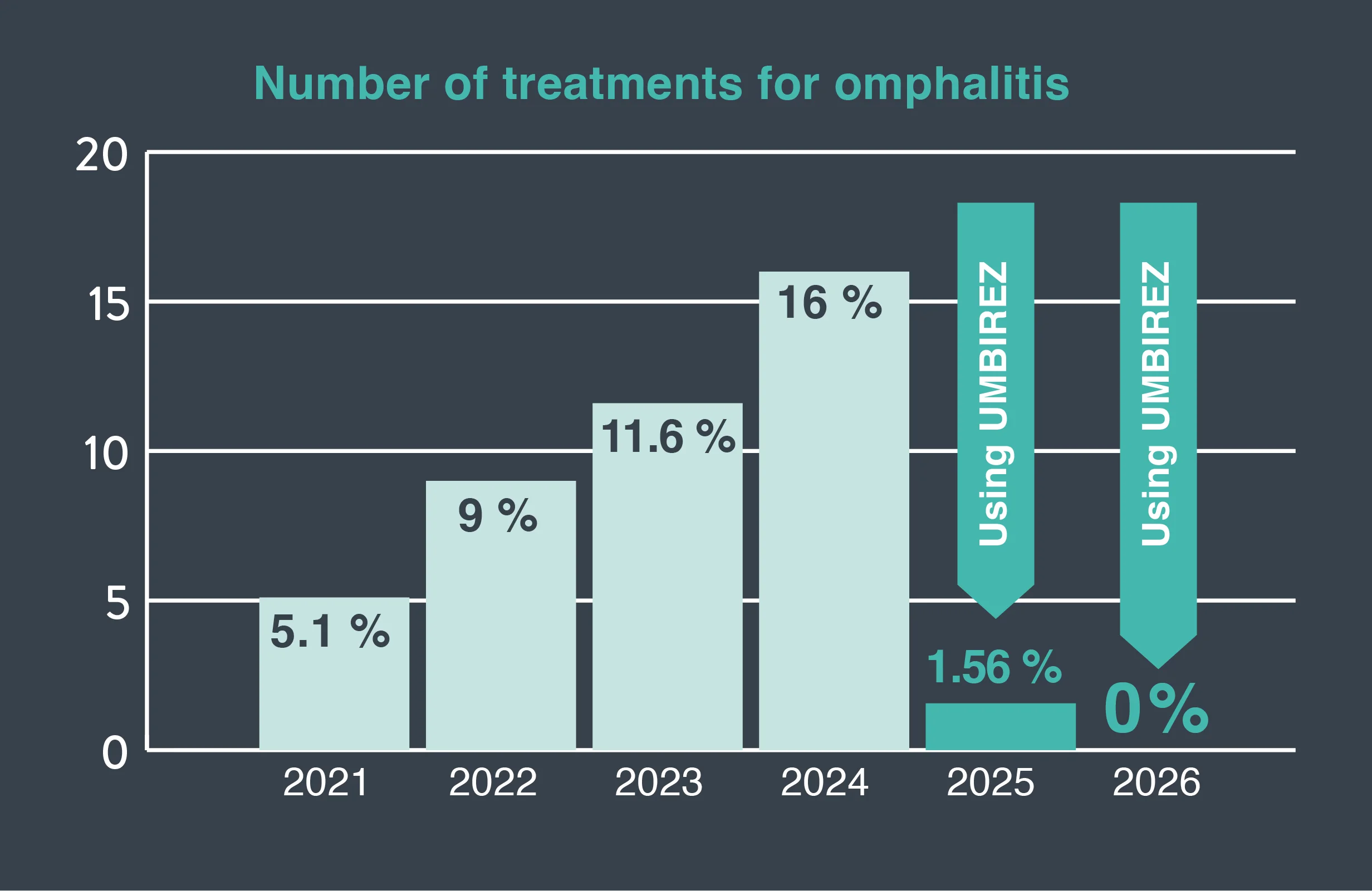
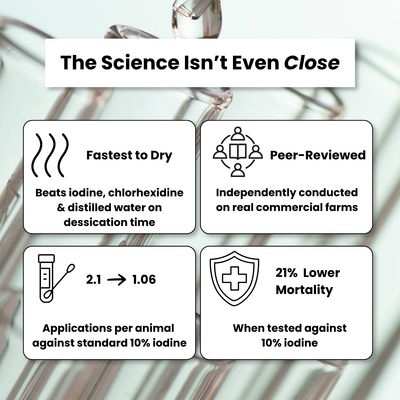
The result: A dramatic reduction in navel infection cases— from 16 % down to just 1.56 % (fig 2) in the first year, and 0% within two years
Additionally, they only had to apply product to each calf once, saving time.
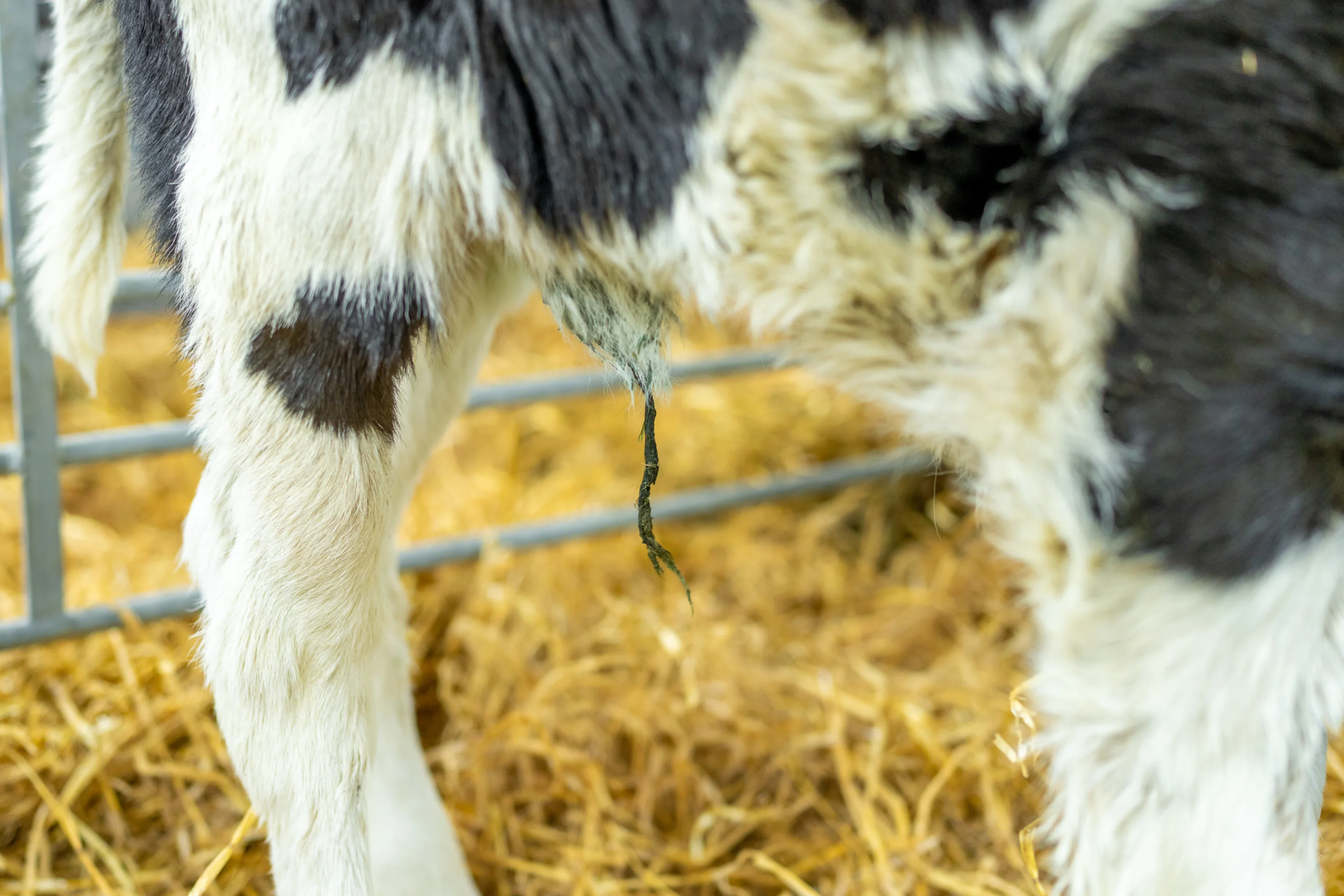
Fewer treatments meant improved calf health, better growth rates, and a significant reduction in antibiotic usage.
Trusted by producers and vets worldwide:
“I primarily use UMBIREZ for navel dipping to prevent navel ill; its ability to dry rapidly and form a durable, secure bond is exceptional. Unlike traditional iodine-based dips, the barrier it creates is highly resistant to being licked off by the dam, ensuring the navel remains protected during those critical first hours of life.” – Jon Higgins DVM, Acorn Farm Vets, NJ (fig 3)
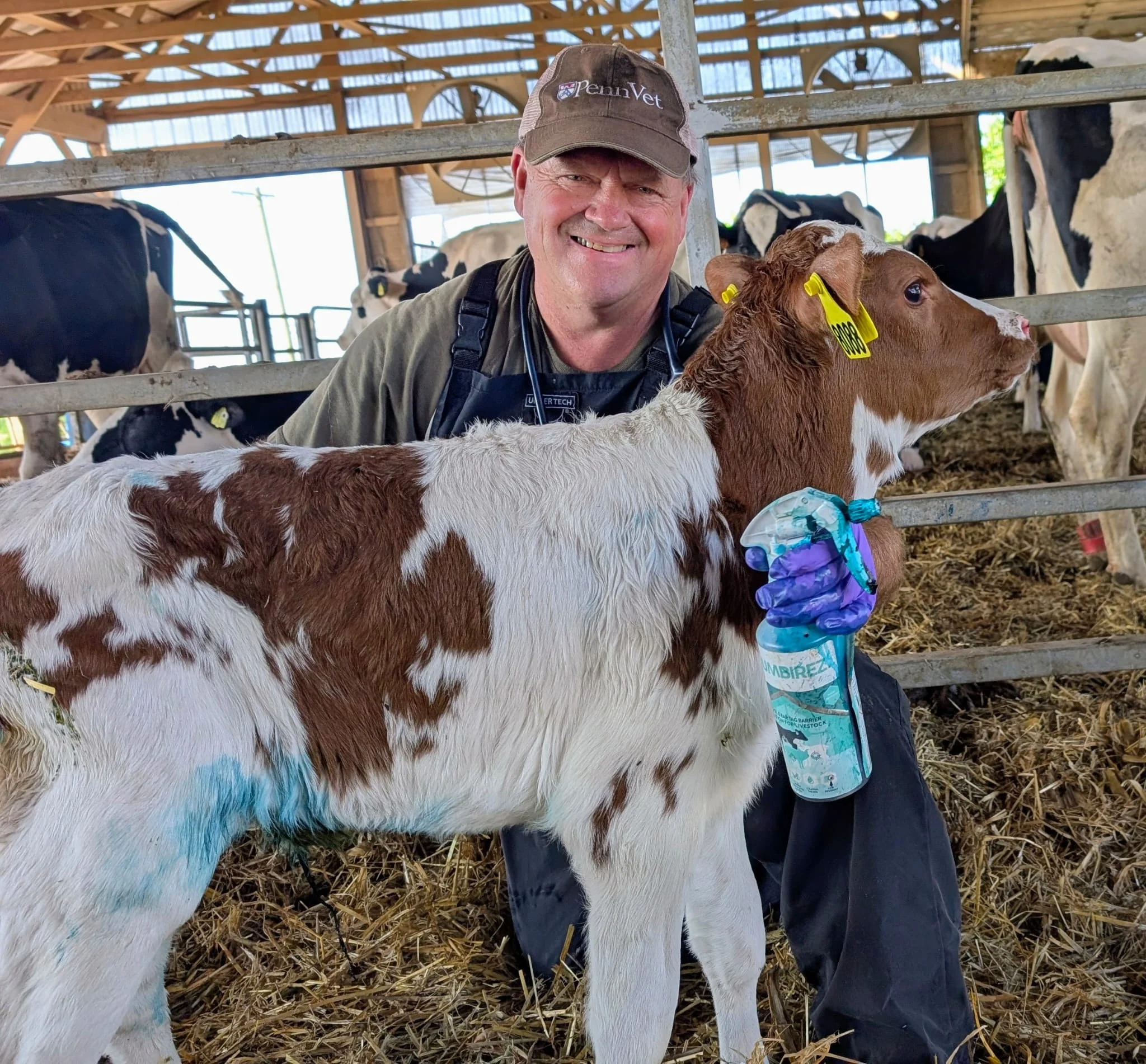
Other observed benefits included:
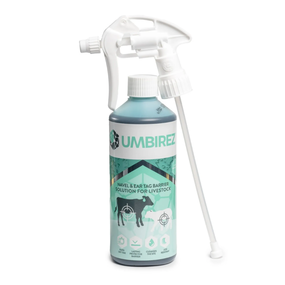
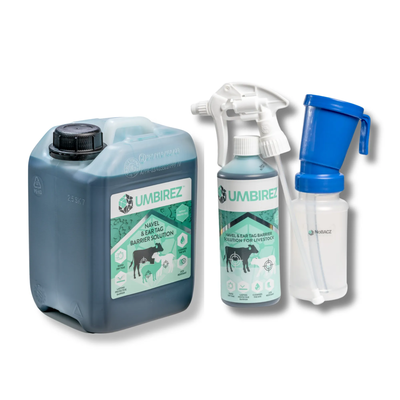
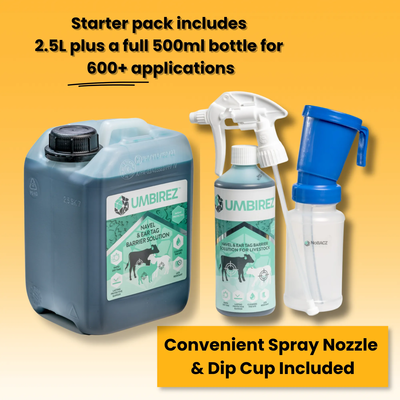
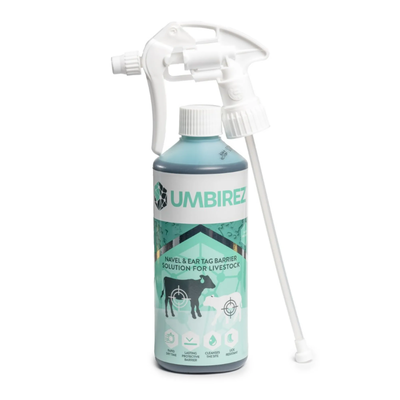
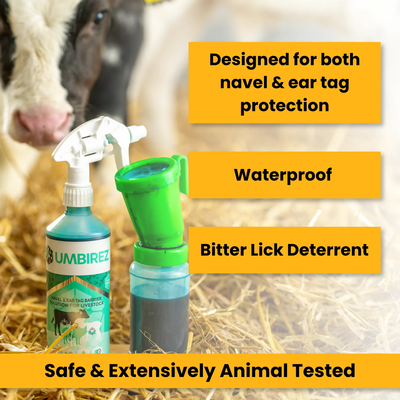
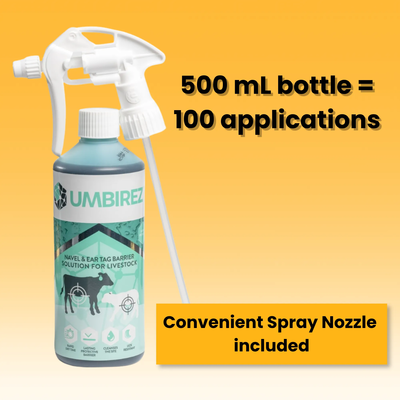
Ease of application (it can be used as a dip or sprayed, and is supplied with a spray nozzle that attaches to the 500ml bottle, dip cups are available from retailers and vets)
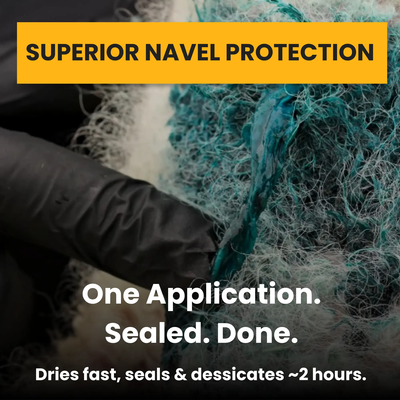
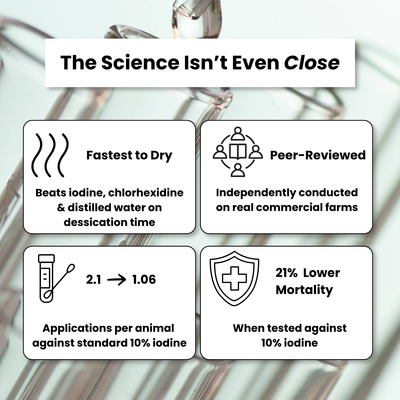
Rapid drying of the navel leading to time and labor savings : UMBIREZ has been shown to dry the navel faster than 10 % iodine, chlorhexidine, or hypochlorous acid-based solutions. Offering faster protection, and on this farm meaning that navels needed only one application compared with two of iodine historically (figure 4)
Visible colour allowing for easy identification :UMBIREZ has a strong blue colouring means identifying where product has been applied is easy, helping to reduce product wastage)
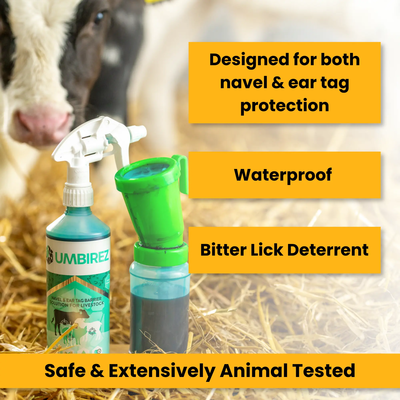
‘Lick-deterrent’ properties (UMBIREZ has a bitter taste to deter licking – overenthusiastic licking is a risk factor for navel infection)
The farm has committed to continuing with UMBIREZ, citing confidence in its performance and practical advantages.
Supporting data from sheep:
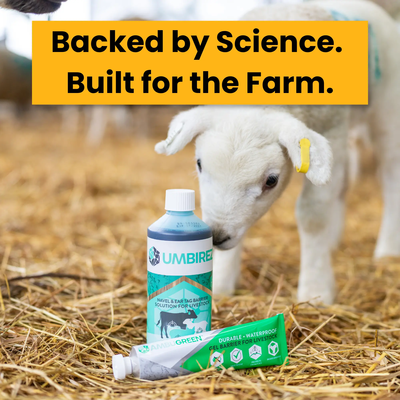
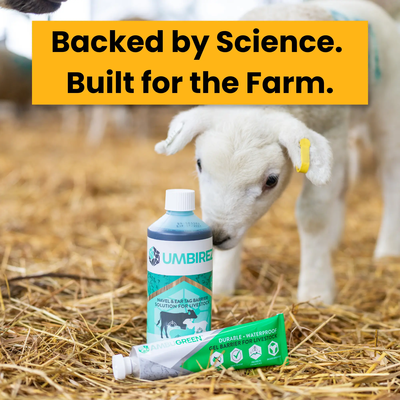
Although developed for calves, UMBIREZ™ was initially tested in lambs. A large-scale independent research study by FlockHealth Ltd across 6,840 lambs showed a 21 % reduction in mortality and improved eight-week weights compared to 10 % iodine-treated controls6. Additionally, lambs in the study were 12.4 ozs heavier than their iodine-treated counterparts.
UMBIREZ is now available in the United States on Agzaga.com in a 16.9 fl oz or a 101.4 fl oz pack.
For further information visit www.umbirez.com.
(1) Perrot, F., Joulié, A., Herry, V., Masset, N., Lemaire, G., Barral, A., Raboisson, D., Roy, C., & Herman, N. (2023). Failure of Passive Immunity Transfer Is Not a Risk Factor for Omphalitis in Beef Calves. Veterinary Sciences, 10(9). https://doi.org/10.3390/VETSCI10090544.
(2) Meier, K. K., Stock, A., Merle, R., Arndt, H., Dachrodt, L., Hoedemaker, M., Kellermann, L., Knubben-Schweizer, G., Volkmann, M., & Müller, K. E. (2024). Risk factors for omphalitis in neonatal dairy calves. Frontiers in VeterinaryScience, 11, 1480851. https://doi.org/10.3389/FVETS.2024.1480851/BIBTEX.
(3) Perrot, F., Joulié, A., Herry, V., Raboisson, D., & Herman, N. (2024). Evaluation of risk factors of omphalitis in newborn beef calves with indoor housing. Preventive veterinary medicine, 227, 106191. https://doi.org/10.1016/j.prevetmed.2024.106191.
(4) Wieland, M., Mann, S., Guard, C. L., & Nydam, D. V. (2017). The influence of 3 different navel dips on calf health, growth performance, and umbilical infection assessed by clinical and ultrasonographic examination. Journal of Dairy Science, 100(1), 513–524. https://doi.org/10.3168/JDS.2016-11654.
(5) Charles, D. (2026, August). Assessing the impact of improved navel hygiene on calf health in a UK herd. Paper to be presented at the American Association of Bovine Practitioners Conference, Minnesota, US
(6) Lovatt FM, Powell JJ, Bastos CAP, McCrone IS. Pseudorandomised controlled trial of a novel navel barrier solution versus 10% iodine to protect navel and ear tag sites of neonatal lambs. Vet Rec. 2025;e70169. https://doi.org/10.1002/vetr.70169